
FEB 2022 — JUL 2025
Ph.D., Biomedical & Systems Engineering
Cairo University · Subspecialty: Artificial Intelligence
Thesis: Detection and Grading of Papilledema Using Artificial Intelligence Techniques.
Biomedical & Systems Engineering
Assistant Professor — AI for Medical Imaging & Assistive Technology
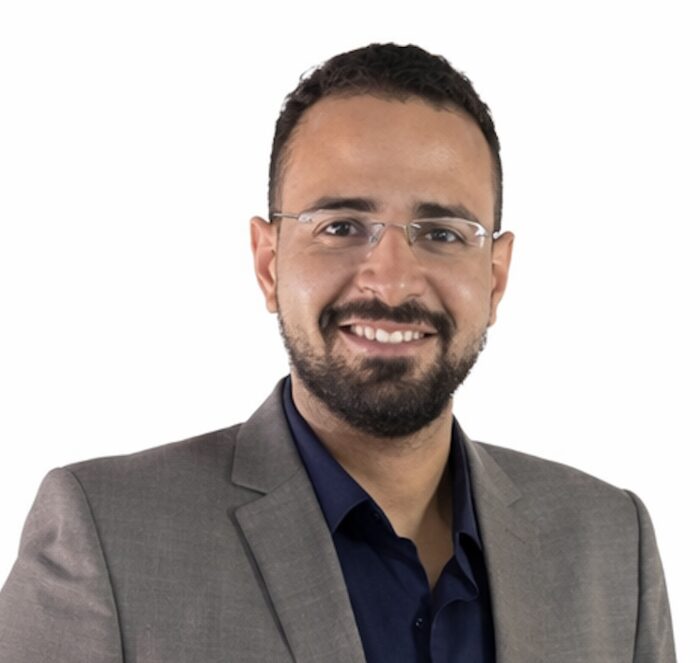
I build AI systems that read medical images and physiological signals — from grading papilledema in retinal scans to real-time seizure and rehabilitation monitoring — and I teach the next group of engineers to do the same.
Focus areas
Selected work
Focus area · 01
Applying AI and pattern recognition to medical imaging and clinical decision-making — AI at the point of diagnosis.
My core research applies artificial intelligence and pattern recognition to medical imaging, with the goal of making diagnosis faster and more consistent. The centerpiece is the detection and grading of papilledema and other retinal disorders from OCT and fundus images — the focus of my MSc and PhD — using deep learning, transfer learning, and fuzzy-logic grading. Beyond the retina, I have built imaging models for skin-cancer classification, breast-cancer detection from histopathology and thermography, gastrointestinal endoscopy, and malaria screening, frequently paired with multi-criteria decision-making to select the best-performing model for a given clinical task.
Focus area · 02
Usable tools for people with impairments — designed for real life, not just the lab.
I design assistive technologies for people with impairments, with an emphasis on tools that are genuinely usable in daily life rather than only in the laboratory. This work spans balance and mobility aids — including wearable devices that detect balance impairments in real time — game-based and robotic rehabilitation systems for people with neurological disorders, and mechanical designs such as stairlift systems evaluated through structural analysis. The common thread is pairing engineering with the lived needs of the user, so that a device is safe, practical, and something people will actually adopt.
Focus area · 03
AI, decision-making, and automation extending beyond the clinic.
A third thread of my work extends the same AI and decision-making methods beyond the clinic into electromechanical and intelligent systems — automation, robotics, and smart infrastructure. It includes predictive-maintenance frameworks for medical equipment, manufacturer-oriented risk assessment of imaging systems, autonomous clinical-laboratory optimization, and applications of multi-criteria decision-making to complex engineering choices. The emphasis is on systems that are reliable, measurable, and deployable — grounded in my field experience with real-world clinical hardware.
Academic background
Degrees in Biomedical & Systems Engineering, focused on artificial intelligence.
Ph.D., Biomedical & Systems Engineering
Cairo University · Subspecialty: Artificial Intelligence
Thesis: Detection and Grading of Papilledema Using Artificial Intelligence Techniques.
M.Sc., Biomedical & Systems Engineering
Cairo University · Subspecialty: Artificial Intelligence
Thesis: Classification of Retinal Disorders Using Optical Coherence Tomography Images Based on Medical Expert Systems.

B.Sc., Biomedical & Systems Engineering
EL Shorouk Academy
Academic roles
Teaching and research positions across universities, 2018 to present.

Assistant Professor
School of Engineering and Computer Science, University of Hertfordshire (hosted by GAF)
Assistant Lecturer
Systems and Biomedical Engineering Department, EL Shorouk Academy
Teaching Assistant
Systems and Biomedical Engineering Department, EL Shorouk Academy
Industry
Hands-on field engineering on clinical MRI systems.
Field Service Engineer
Promed Egypt
MRI systems — installed Philips Healthcare equipment, ran site inspections and planning proposals, and performed preventive and corrective maintenance.
In the classroom
Courses offered across AI, computing, and signal & image processing.
Bibliography
Peer-reviewed journal and conference research, filterable by topic.
Get in touch
Reach me by email or through my official research profiles.